
This article has been written by Mario CIARAMITARO, PhD and researcher at the University of Venice
There is a Venetian saying that Robert C. Davis chose as the title for the final chapter of his new italian edition of the essay Venice, the Tourist Maze: chi ciapa i schei xe contento, i altri no — whoever takes the money is happy, everyone else is not.
It is not a joke. Those who profit from tourism care about nothing beyond extracting value. When a city stops being a place where people live and becomes a machine for harvesting tourist revenue, the benefits concentrate in the hands of a few while the costs — disappearing services, loss of identity, soaring rents — spread across the entire territory. Those who cannot coexist with this monoculture leave: physically, by moving away, or psychologically, by surrendering to life inside a stage set.
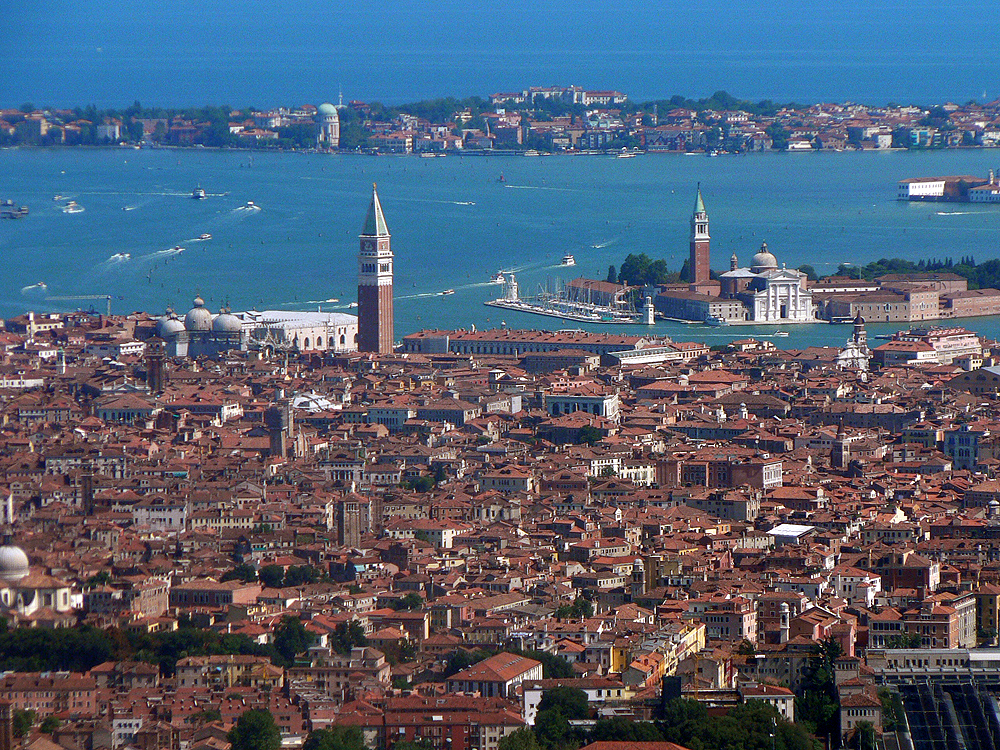
In thirty years, Venice has lost over a third of its residents, and its historic center could be entirely depopulated by 2054. The city that for centuries built its identity on the utopia of its own existence on water, on the ingenuity and uniqueness of its inhabitants, is losing its lifeblood because tourism has imposed itself as a monoculture that consumes the very conditions that make it possible. For the visitor, the city has become a consumable good, something to photograph, cross quickly, and possess through its imagery. Venice thus stands as a cautionary reference point for urban centers worldwide where mass tourism corrodes the social fabric while generating new economic flows.
More than thirteen years have passed since the introduction of short-term digital rental platforms in the early 2010s. The urban transformations they triggered across numerous cities, widely documented in the literature, find in Venice one of the most cited paradigms of gentrification and progressive residential emptying of historic centers. While there are positive examples of bold political decisions to set firm limits on digital platforms and designed compensatory measures creating new spaces for residents, the question of how to govern these phenomena remains far from resolved.
But in this context, Med4Regen takles those problems from a different angle: there is the possibility to put at the center of regenerative tourism cultural institutions and associations to create new touchpoints between visitors and citizens, enabling the museums to go far beyond the preservation of heritage or the work within local community. A different approach is taking shape one that does not merely seek to limit damage, but to regenerate what tourism has degraded: the framework emerging from the Med4Regen project proposes to design from place, not for consumption.
A new framework
How to design avoiding consumption? We better map all the different components we want to preserve which include tangible and intangible heritage but also, and most importantly, community relationship and imaginery.
A new framework is emerging from the intersection of design thinking and design for social innovation, and it carries a name worth remembering: hyperlocal design. Shared within the Med4Regen project this approach was proposed by Università Iuav di Venezia and refined through all the partnership’s focus groups. At its core, the hyperlocal approach proposes a radical shift in how we understand “local”: not as a geographic boundary, but as a layered, temporal, and relational reality where heritage, traces, stories, actions, events, and imaginaries become design material. The European Commission itself is moving in this direction, framing regenerative tourism as the next evolution beyond sustainability, a practice that restores ecosystems, revitalizes cultures, and empowers communities rather than extracting from them. Four strategic action models, developed by project partner OTL, anchor the framework to the possibility of envisioning a regenerative action: Repair, Reconnect, Re-engage, and Redistribute. Together, they offer a vocabulary for interventions that leave places and people stronger than before.
The core keywords
The framework operates through two connected phases. First, a research phase dedicated to surfacing what is often invisible: tacit knowledge held by residents, grassroots initiatives run by citizen collectives, and the collective memory embedded in places. Researchers map six dimensions taken from a framework developed by design professor Raffaella Fagnoni: Heritage, Traces, Stories, Actions, Events, Imaginary using a structured table that translates a circular vision into a practical recording tool. This is not desk research; it requires deep immersion in the social fabric of micro-territories. Second, a planning phase where the materials gathered are recombined into low-impact value chains. What the project takes from a context, stories, materials, relationships, must return in the form of skills, cultural services, maintenance of places, and new opportunities. What makes this possible is the deliberate integration of temporal and spatial dimensions: the past becomes a resource for present innovation through a spiral process that revisits traditions with fresh eyes. SMEs and cultural institutions enter as co-creators, not sponsors. Companies already expressing social values are invited to align their Corporate Social Responsibility with community needs through scalable micro-commitments, from curating cultural content to co-designing event formats.
A new mindset
The deeper argument of hyperlocal design is ethical before it is operational. It challenges the extractive logic that has dominated tourism for decades: the assumption that a territory’s value can be packaged, sold, and consumed without consequence. In order to reverse this, the framework insists that tacit knowledge and collective memory cannot become private assets — they must always be returned to the communities that safeguard them. This is not a minor ethical footnote; it is the foundational principle that separates genuine regeneration from sophisticated greenwashing.
The EU Sustainable Tourism Strategy expected in 2026 is anticipated to embed regeneration as a long-term goal across all Member States, but policy alone cannot deliver transformation. What would happen if every cultural institution, every small business near a heritage site, every municipal tourism office adopted a hyperlocal lens? The Med4Regen partners suggest we would see community archive projects turning family memories into collective heritage, abandoned spaces reactivated through artistic residencies, and museums redirecting visitors toward authentic encounters with residents. The shift required is not technical but relational, from an individualistic to a collective mindset, from scale to method, from consuming places to co-authoring their futures. That is the regenerative promise, and hyperlocal design offers a credible path to deliver it.
MARIO CIARAMITARO, PhD
Researcher at the University of Venice