
What if the Future of Regenerative Tourism Started in a Museum?
For decades, tourism has been remarkably easy to measure. We count visitors, overnight stays, tickets sold and economic impact. If the numbers go up, we usually assume we’re doing well.
Regeneration, however, refuses to fit neatly into a spreadsheet.
The question isn’t simply How many people came? It’s What did their presence leave behind? Did the place become stronger? Did local people gain something meaningful? Did culture become more visible, more relevant, more alive?
These are the questions driving the MED4REGEN project.
Across the Mediterranean, museums, universities, cultural institutions and local communities are exploring a different model of tourism – one that doesn’t just consume places but helps them flourish. Regenerative tourism asks us to think beyond destinations and attractions. It invites us to see cities as living ecosystems, where heritage, creativity and everyday life constantly shape one another.
That sounds inspiring. Measuring it is another story.
If regeneration were only about numbers, life would be much simpler. We could produce a colourful dashboard, declare success and all go home. Unfortunately – or perhaps fortunately – cities are more complicated than Excel.
Some of the most important changes happen quietly.
A museum opens its doors to local designers. Students work alongside curators instead of only visiting exhibitions. Residents begin telling stories that were never part of the official narrative. Small collaborations emerge between institutions that had never spoken to each other before.
None of these moments generates spectacular statistics. Yet together they can change the way a city works.
This is why the methodology developed within MED4REGEN starts somewhere unexpected: not with visitors, but with people who create the experience.
Before asking whether tourism has changed, we ask whether institutions have changed. Are museums more open to collaboration? Are local stakeholders working together? Have participants developed new skills and confidence? Is there greater readiness to test new ideas?
Pilot Action 1 focuses on building these capacities because regenerative tourism doesn’t begin when the first visitor arrives. It begins much earlier – with trust, shared knowledge and the willingness to experiment.
That also changes the purpose of evaluation.
Instead of treating evaluation as something that happens after a project, it becomes part of the project itself. It documents learning, highlights unexpected partnerships and helps identify what should be improved before moving to the next stage.
Numbers still matter. Participation, diversity of stakeholders and the implementation of pilot activities all provide valuable evidence. But they are only one side of the story.
The other side is qualitative. It asks whether people think differently, whether institutions collaborate more effectively and whether new ideas have enough momentum to continue beyond the project.
Perhaps the best result of a pilot is not a perfect solution but the confidence to try something that seemed impossible a year earlier.
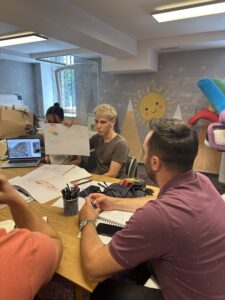
For Sarajevo, this approach feels particularly relevant.
This city has always evolved through encounters between cultures, ideas and people. Its museums are not only places where history is preserved; they are becoming places where new relationships are created. Living Labs, temporary exhibitions, public events and creative interventions transform heritage from something we observe into something we collectively shape.
Regeneration, then, is not a finish line. It is a process.
You can measure parts of it. You can count participants, workshops and partnerships. But some of its most valuable outcomes are less tangible: stronger connections, greater curiosity, renewed confidence and communities that begin to see themselves as active authors of their own future.
Perhaps that is the most honest answer to the question.
Yes, regenerative tourism can be measured – but only if we remember that what matters most is not always what is easiest to count. Sometimes the most meaningful indicator is simply that people leave a place caring about it a little more than when they arrived.
This article was written by the University of Sarajevo