
From sustainable tourism to regenerative tourism : why a shift has become unavoidable
For years, sustainable tourism has offered an essential reference framework to limit negative impacts. Yet, in practice, it has increasingly shown its limits. Environmental commitments often coexist with growth-driven strategies, while social tensions, territorial inequalities and loss of local meaning persist. These contradictions are now widely acknowledged: doing “less harm” is no longer sufficient when tourism continues to put pressure on places and communities.
Regenerative tourism is emerging as a necessary next step. Rather than focusing solely on mitigation, it seeks to actively restore and strengthen relationships between tourism, culture, communities and territories. This approach does not deny the need for regulation; it reframes it. Experience shows that tourism regulation is far more effective when designed and implemented at the territorial level, through co-construction between tourism actors, public authorities and residents. Locally grounded solutions allow for dialogue, shared responsibility and stronger social acceptability.
Beyond quantitative tools, regenerative tourism integrates social and environmental dimensions into the way tourism is governed and experienced. Improving acceptability means going beyond visitor numbers, and ensuring that tourism contributes to quality of life, cultural vitality and environmental balance for those who live in the territories concerned.
What local focus groups reveal across MED4REGEN territories
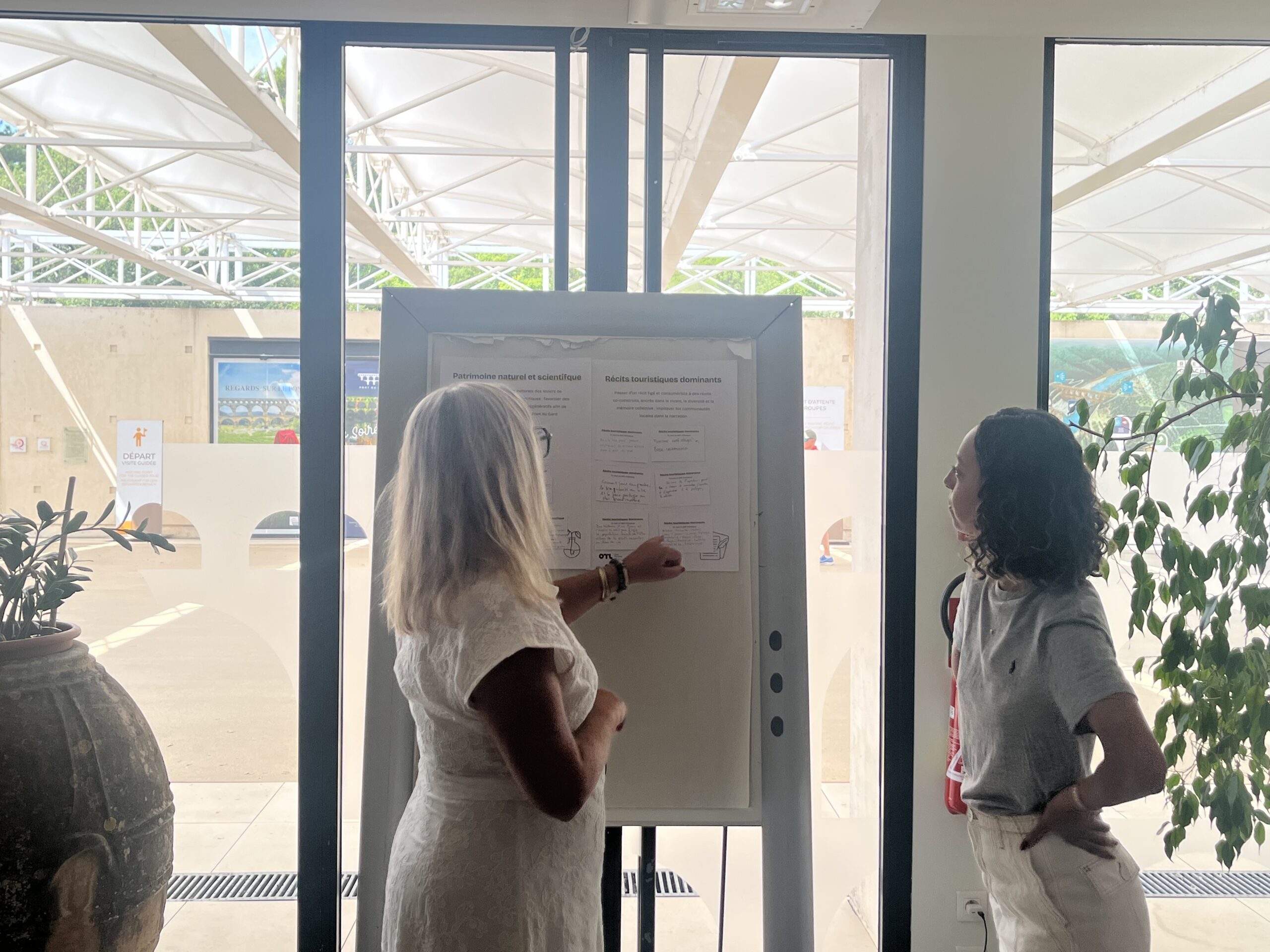
These convictions are strongly reflected in the work carried out within MED4REGEN. Across partner territories, local focus groups brought together cultural organisations, tourism professionals, SMEs, public authorities, community representatives and civil society actors. Their insights were consolidated in Deliverable D.1.2.4, the Map for regenerative cultural & tourism processes and stakeholders, which offers a visual and systemic synthesis of shared challenges, assets and dynamics.
The mapping highlights recurring structural barriers: fragmented governance, short-term funding mechanisms, concentration of tourism flows in iconic areas, rigid regulatory frameworks and limited inclusivity. These challenges are not isolated issues, but interconnected systems that hinder long-term transformation. Addressing them requires coordinated action rather than isolated projects.
At the same time, the map reveals a strong base of existing assets. Rich cultural heritage, living traditions, active community initiatives, creative experimentation and committed local actors are already present across territories. The challenge is not the absence of resources, but their fragmentation and under-leveraging. Regenerative tourism therefore relies less on inventing new solutions than on reconnecting existing ones within coherent territorial strategies.
A shared map to guide collective action
Another key lesson emerging from the MED4REGEN mapping concerns stakeholders’ roles. Cultural organisations and museums appear as strategic operational hubs, positioned at the intersection of heritage, tourism and communities. Local authorities and tourism boards play a crucial coordinating role, while universities, labs and funding programmes contribute through knowledge, capacity building and enabling conditions. Communities express a strong willingness to engage, provided participation moves beyond symbolic consultation towards genuine co-governance.
The MED4REGEN map does not propose a single model to be replicated. Instead, it provides a shared analytical and strategic framework to help territories identify leverage points for action. By linking challenges, assets, needs and stakeholders, it supports more coherent decision-making and alignment across partners.
Ultimately, MED4REGEN confirms that regenerative tourism is not an abstract concept, but a collective process rooted in territories. By grounding tourism development in local realities, co-constructed governance and long-term visions, the project lays the foundations for a transition that is not only more sustainable, but genuinely regenerative.